Culture & Traditions
Formentera Traditions & Culture: A Guide to Island Life
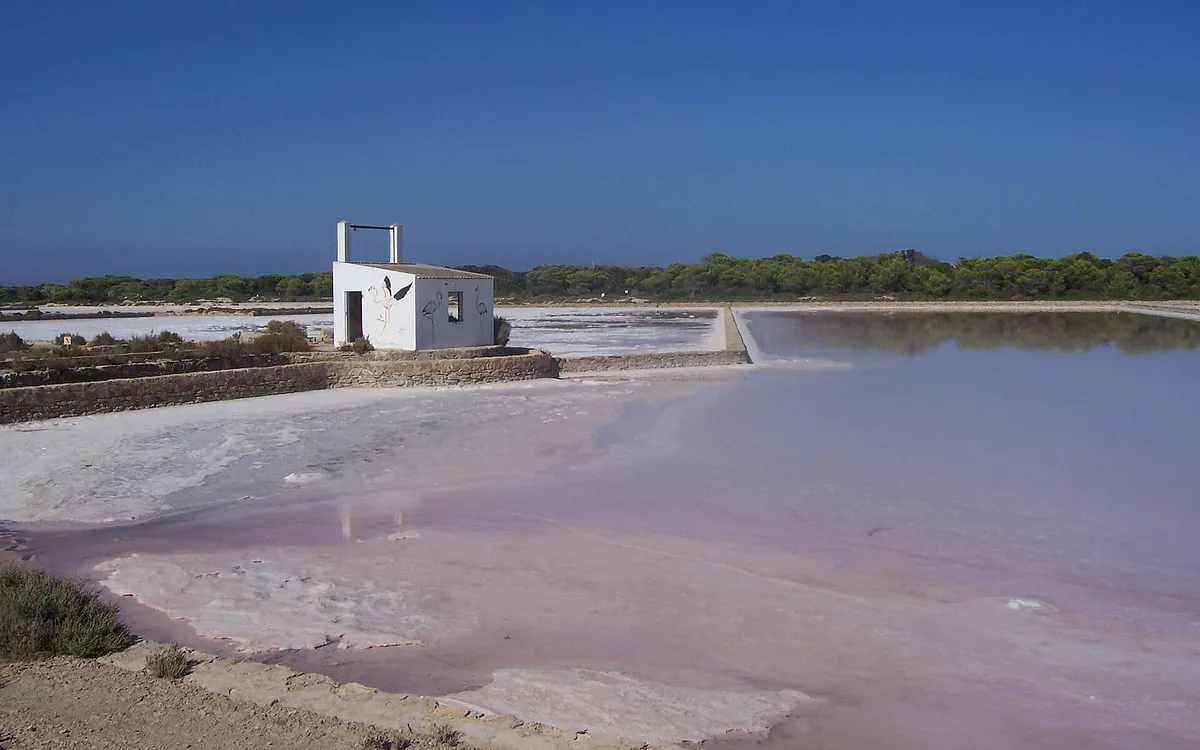
Photo: Libens libenter / Wikimedia Commons (CC BY-SA 3.0)
Beyond the turquoise water and quiet coves, Formentera guards a rural soul shaped by centuries of living close to the land. To understand the island is to look at its houses, its fields and its festivals.
Whitewashed houses and dry-stone country
The traditional Formentera home, or finca, is a cubist composition of blinding white walls, thick enough to keep the summer heat at bay, topped by a flat roof once used to collect rainwater. Fields are stitched together by kilometres of dry-stone walls, and defensive watchtowers still stand along the coast, raised centuries ago to warn of pirate raids. Casa Trini belongs to exactly this tradition, and staying in it is part of the experience.
Life close to the land
Formentera’s countryside tells its own story. Ancient fig trees spread outward on wooden props, their branches trained into wide green parasols that shade the earth. Almond trees blossom in late winter, and fragrant woods of sabina (a wind-sculpted juniper) run down to the dunes. For centuries the island lived off the sea salt harvested at the salt flats of Ses Salines, whose shimmering pools still draw flamingos and photographers alike.
Fiestas, dance and dress
Village life reaches its peak during the summer festes, the patron-saint festivals held in each parish. The heart of these celebrations is the ball pagès, a solemn, hypnotic courtship dance performed to drums and reed flutes, the dancers dressed in embroidered traditional costume and heavy silver jewellery. The island’s patron, Sant Jaume, is honoured traditionally around 25 July, while the capital, Sant Francesc Xavier, gathers around its fortified 18th-century church, once a refuge for villagers.
Fishermen and deep roots
Down in coves such as Es Caló de Sant Agusti you will find rows of weathered wooden boat huts, the escars, where fishermen once dragged their vessels ashore. History runs deeper still: Phoenicians, Romans and later settlers all passed through, leaving an island that has never lost its slow, unhurried rhythm.
Tips for experiencing the real Formentera
- Time your visit to catch a village fiesta and, if you can, a performance of the ball pagès.
- Respect the quiet: the rural pace is the point, not an inconvenience.
- Visit Ses Salines at golden hour, and drive up to the La Mola lighthouse for sweeping views.
A stay at Casa Trini places you right inside this heritage: a rustic house sleeping 1 to 8, just 500 m from the sea and roughly 1 km from Sant Francesc. With its thick white walls and unhurried air, it is itself a small example of traditional Formentera architecture, and the perfect base from which to discover the rest.
Come and see it for yourself
Casa Trini sleeps 1 to 8, just 500 m from the sea.
Check availability